
Hiring a genealogist in Italy is often necessary when Italian historical records are not available online. Many documents are preserved only in municipal archives, parish registers, and local historical collections across Italy.
Families researching their ancestry often decide to hire a genealogist in Italy when online databases are no longer sufficient. Many families decide to hire a genealogist in Italy when municipal archives or parish registers are not available online.
- Why Italian Genealogy Often Requires Local Research
- Understanding Italian Genealogical Records
- When Hiring a Genealogist in Italy Becomes Necessary
- How to Hire a Genealogist in Italy: What to Look For
- My Approach to Genealogical Research in Italy
- What a Genealogy Research Report Includes
- Starting Your Italian Genealogy Research
- Need Help with Genealogy Research in Italy?
Professional genealogy research in Italy often involves consulting civil records, parish registers, and historical archives that are not accessible remotely. While digital platforms have made millions of records easier to access, a large part of Italian documentation still remains available only locally.
For anyone researching their family history from abroad, this can become a major obstacle. Municipal offices may not respond quickly to international requests, and parish archives often require direct contact or in-person consultation.
Working with a professional genealogist in Italy can help overcome these barriers and make it possible to locate records that would otherwise remain difficult to access.
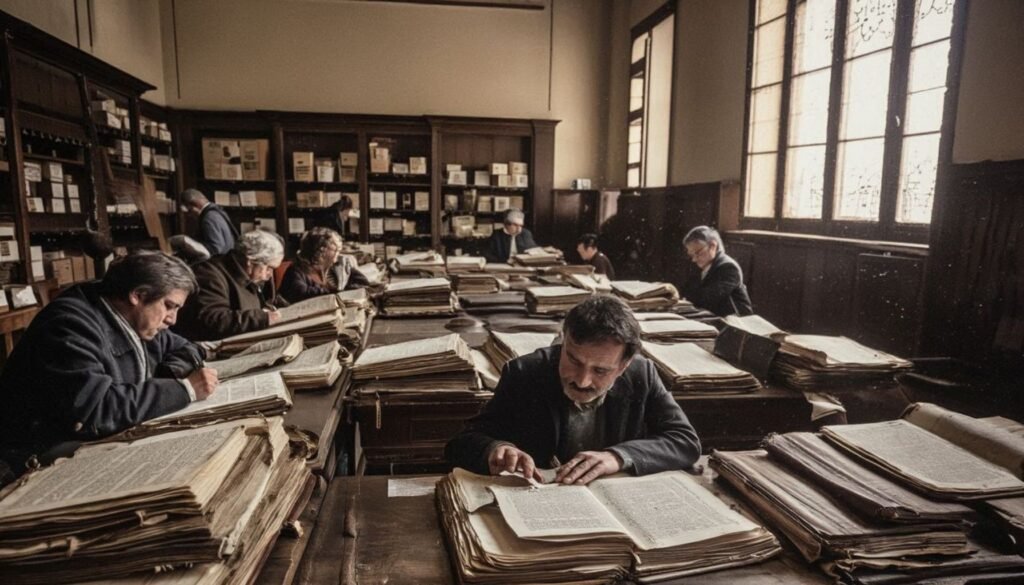
Why Italian Genealogy Often Requires Local Research
Italian historical records are preserved through a complex system that developed over centuries. Civil registration records are generally maintained by municipal offices, while earlier documents are preserved in parish archives or diocesan repositories. In addition, many important collections are held in regional state archives.
Although digitization projects have made great progress in recent years, a large number of historical records have never been indexed or photographed. Some archives allow consultation only on site, and others require formal requests or appointments.
For researchers living abroad, these practical limitations can make genealogical research extremely difficult. Even when the correct town of origin is known, locating the right archive and gaining access to the records may require local knowledge and experience.
A genealogist working in Italy can communicate directly with local institutions, visit archives in person, and follow up on requests when necessary. Working with a genealogist in Italy can help locate historical documents preserved in local archives.
Understanding Italian Genealogical Records
Italian genealogical research relies on several types of historical records that reflect the administrative and religious history of the country.
Civil Registration Records in Italy
Civil registration, known as stato civile, forms the foundation of most modern genealogical research in Italy. These records include births, marriages, and deaths and often contain valuable details about parents, occupations, and places of residence.
In many regions civil registration began during the Napoleonic period in the early nineteenth century, while nationwide civil registration became standard after the unification of Italy.
Civil records are usually preserved in municipal archives and sometimes duplicated in state archives. They are among the most important sources for reconstructing family lines in the nineteenth and twentieth centuries. A professional genealogist in Italy can access municipal archives and parish collections that are not digitized.
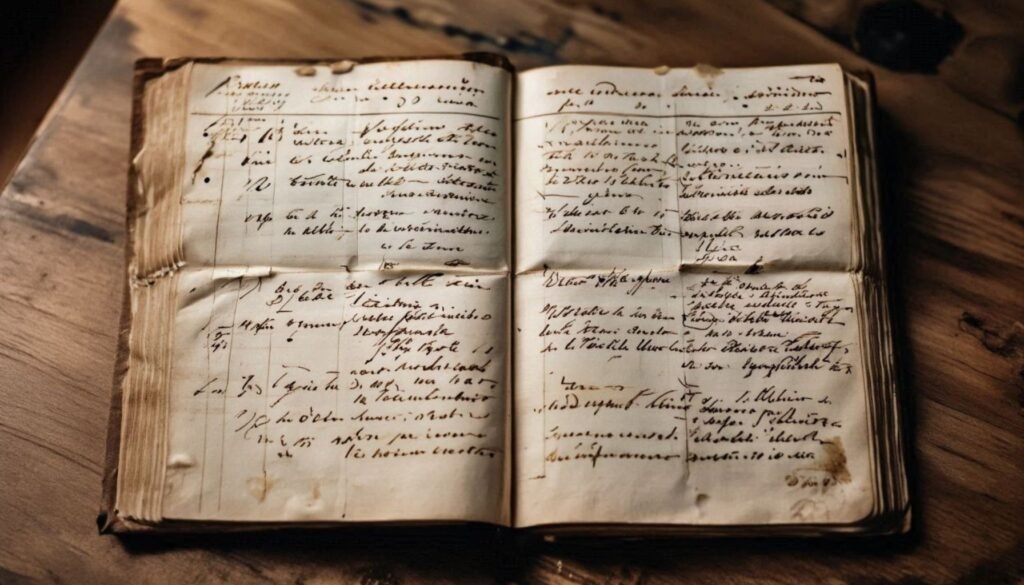
Parish Records and Church Archives
Before the introduction of civil registration, the Catholic Church was responsible for recording the most important events in the life of a community. Parish registers therefore represent the main source for genealogical research prior to the nineteenth century.
These registers typically include baptisms, marriages, and burials and in many Italian parishes they begin in the sixteenth century or even earlier.
Parish archives are extremely valuable but they can also be challenging to access. Some registers are preserved in individual parishes, while others have been transferred to diocesan archives. Access policies vary widely, and in many cases consultation requires local contact or direct visits. Earlier generations can often be traced through Italian baptism certificates preserved in parish archives.
For research that extends before civil registration, it is often necessary to hire a genealogist in Italy who can access parish archives directly.
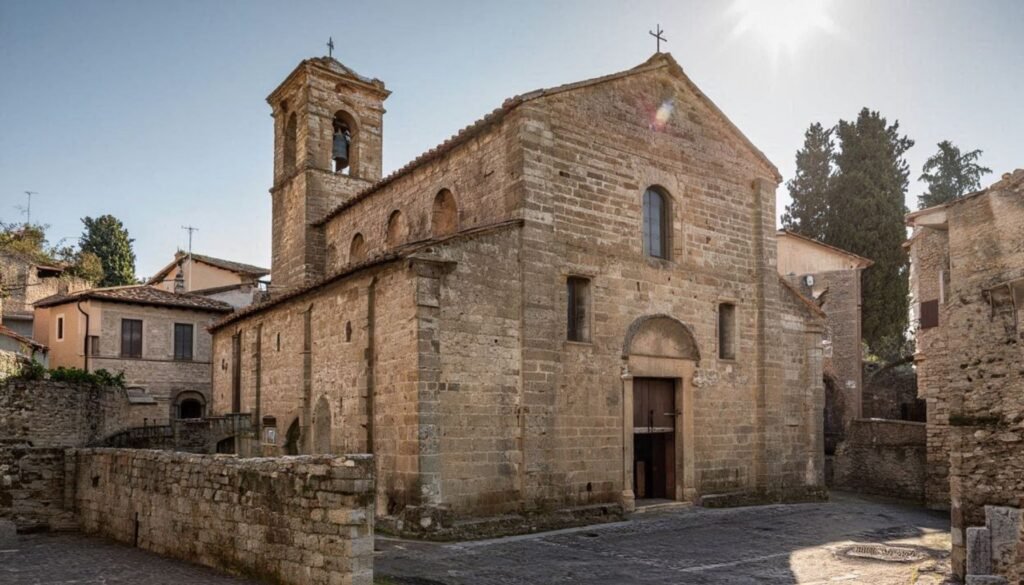
Other Historical Sources for Genealogy
Beyond civil and parish records, genealogists often consult additional sources that help reconstruct the broader history of a family.
Notarial archives contain wills, property contracts, and legal agreements that can reveal family relationships and social status. Military records may provide information about conscription and service. Cadastral documents document land ownership and taxation, offering insights into the economic conditions of a family.
When combined with civil and parish records, these sources can provide a much deeper understanding of the lives of earlier generations.
When Hiring a Genealogist in Italy Becomes Necessary
Many families begin their research independently using online archives and genealogy databases. However, sooner or later most projects reach a stage where local research becomes essential.
This is particularly common when attempting to trace ancestors beyond the nineteenth century. At that point the research often shifts from civil records to parish registers that may not be digitized or indexed.
Another situation arises when families need official documents for legal procedures such as citizenship applications. Municipal offices may require specific requests or repeated follow-ups, and obtaining the correct documents can take time without local assistance.
Historical handwriting and Latin terminology can also present difficulties. Older records are not always easy to interpret, and understanding them often requires experience with paleography and historical documents.
How to Hire a Genealogist in Italy: What to Look For
Selecting a genealogist is an important step in any research project. Italian archival systems can be complex, and experience with local institutions is essential.
A professional researcher should be familiar with municipal archives, parish archives, and state archives, as well as with the historical structure of Italian records.
Local presence can also be an advantage. A genealogist who regularly works in Italian archives can often locate documents more efficiently and maintain direct communication with archive staff.
Professional associations may also indicate a commitment to high standards of research. For example, membership in the Association of Professional Genealogists reflects adherence to professional guidelines and ethical practices in genealogical work. Working with a professional researcher allows families to hire a genealogist in Italy who understands the structure of local archives and historical records.
Professional associations can also indicate a commitment to high research standards and ethical practices. For example, I am a member of the Association of Professional Genealogists, an international organization that promotes professional standards in genealogical research.

My Approach to Genealogical Research in Italy
My work focuses on helping individuals and families reconnect with their Italian roots through archival research conducted directly in Italy. Many of the records I locate are preserved in municipal archives and parish collections that are not accessible online.
Each research project begins with the information available within the family. Even small details such as an approximate year of birth or the name of a village can provide the starting point for archival investigation.
From there the research expands into the relevant archives, where civil records, parish registers, and other historical sources can gradually reveal the story of earlier generations.
One of the most rewarding aspects of genealogical research is seeing how individual documents connect together. A birth record may identify parents and occupations, a marriage record may introduce a new branch of the family, and a parish register may extend the family line further back into the past.
What a Genealogy Research Report Includes
At the conclusion of a research project, clients typically receive a detailed report explaining the results of the investigation.
This report includes images or copies of the original documents located during the research as well as full archival references for the sources consulted. It also explains how the documents connect to one another and how they contribute to the reconstruction of the family line.
Whenever possible, the report also provides historical context about the towns where the family lived and the social conditions that shaped their lives.
Genealogical research often reveals much more than names and dates. It can uncover occupations, social roles, and connections within the local community that help bring the history of a family to life.
Starting Your Italian Genealogy Research
Anyone interested in exploring their Italian ancestry should begin by collecting the information already available within their family. Old documents, photographs, letters, and family stories can all provide valuable clues about earlier generations.
Once the town of origin has been identified, it becomes possible to explore the local records that document the history of that community.
For many families, this process transforms scattered fragments of information into a documented family history that reconnects present generations with their Italian heritage.
Need Help with Genealogy Research in Italy?
If you are searching for Italian ancestors or trying to locate historical records preserved in Italian archives, professional assistance can help navigate the complexity of Italian municipal, parish, and state archives.
For many families exploring their heritage, choosing to hire a genealogist in Italy becomes the most effective way to locate historical records and reconstruct their family history.
Genealogical research conducted directly in Italy can often uncover documents and historical information that are not available through online databases.
If you are looking to hire a genealogist in Italy or need help locating Italian historical records, professional archival research can help uncover documents preserved in municipal offices, parish archives, and state archives across Italy.
Many people also wonder about the cost of genealogy research in Italy, which can vary depending on the type of archival work required.
Related Articles

The Value of Memory in Genealogy: Migration, Identity and Historical Context
Genealogy Begins with Documents, but Memory Gives Them Meaning The value of memory in genealogy…

How to Find Italian Birth Records Online
Introduction If you’re trying to find Italian birth records online, this guide will help you…

How to Research Italian Ancestors: A Step-by-Step Guide
Introduction How to research Italian ancestors. Every genealogical journey begins with a question: Who were…
